
Lapse Productions tracks the strongest Earth Day campaigns every year, and the pattern is now unmistakable: audiences have stopped rewarding green slogans and started demanding proof. The campaigns below, led by the standout of the 2026 season, all pass that test. Each one either shows its math, builds in a way for viewers to act, or puts a real solution on camera. If your company is planning sustainability content, these are the films worth studying before you write a single line of script.
Earth Day video marketing at a glance
- Earth Day is observed every April 22 and draws more than a billion participants across 190+ countries
- 2026 standout: Tata Power Renewable Energy’s split-screen film making the practical case for clean power
- The European Commission has found that 42 percent of brands exaggerate their green claims, which is why accountability now beats slogans
- The modern playbook: show proof, invite participation, or put a real solution on camera
- Earth Day campaigns launch in mid April, which means production wraps in March
What is Earth Day?
Earth Day, observed annually on April 22, is the world’s largest civic event for environmental protection. First held in 1970 after US Senator Gaylord Nelson called for a national day of environmental action, it now draws more than a billion participants across 190+ countries each year, according to EarthDay.org. Recent Earth Days have rallied around the theme Our Power, Our Planet, spotlighting the global push to triple renewable energy.
For brands, the stakes have changed. Regulators and consumers alike now scrutinize environmental claims, so an Earth Day video that cannot back its message with evidence does more harm than good. The campaigns below show what credible sustainability storytelling looks like.
Which Earth Day video ads are worth studying?
1. Tata Power Renewable Energy: Choose Power That Protects Earth

The standout of Earth Day 2026. Tata Power Renewable Energy runs two versions of everyday life side by side, one powered by conventional energy and one by renewables, spanning solar, wind, microgrids, EV charging, and battery storage across homes, farms, and industry. The split-screen format makes an abstract choice instantly visual, and crucially, the film argues renewables win on cost and reliability, not just conscience. That practical framing is what separates persuasion from preaching, and it is the reason this film leads the list.
2. Wherefrom: Stop The Wash

Sustainability review platform Wherefrom went after greenwashing itself, satirically copyrighting the empty slogans brands lean on, like Green Is Our Nature, and setting the whole thing to a deliberately catchy jingle. The campaign is built on a European Commission finding that 42 percent of brands exaggerate their green credentials. It works because it names the problem every other campaign on this list is trying to avoid: saying green things without doing green things.
3. Back Market: Hack Market

Refurbished electronics marketplace Back Market, with Paris agency Marcel, used AirDrop to message shoppers inside Apple stores in Paris, Berlin, and London at the exact moment they were about to buy new, pitching the refurbished alternative and its savings in CO2, raw materials, and e-waste. It remains the sharpest example of point-of-decision environmental marketing: the message arrives precisely when the viewer can act on it.
4. Greenpeace Brazil: Los Santos +3C
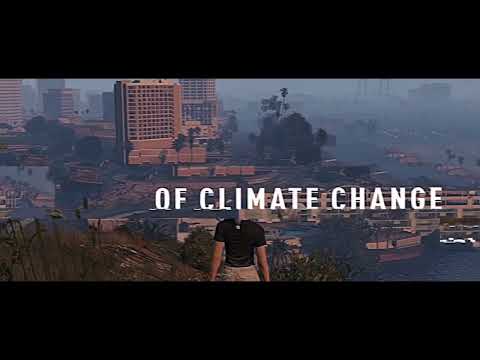
Greenpeace Brazil modded GTA’s Los Santos to show the city after three degrees of warming, then filled it with missions like rescuing climate refugees and distributing clean water. It reaches an audience traditional advocacy never touches, inside a world they already care about, and converts awareness into playable participation. The best example yet of meeting viewers where they actually spend their time.
5. Lavazza: Marte! For Another Planet

Lavazza imagines trying to grow coffee on Mars, and fails, because Earth is the only planet where coffee can exist. The whimsical premise carries a serious payload: the brand’s daily product depends entirely on a healthy planet, which is also the most honest reason any company has for caring. Tie your sustainability story to what your business genuinely depends on, and the message stops feeling borrowed.
6. Honda: Vertical Bike

In the Peruvian Amazon, more than a million trees were being cut down each year just to harvest aguaje fruit from their crowns. Ogilvy Peru and Honda engineered a climbing device that lets harvesters ascend the trees safely instead, and the film simply documents it working. No metaphors, no montage of glaciers: a real machine solving a real problem. Product-as-solution is the most defensible sustainability story there is.
7. Soixante Circuits and BETC: IRL Trashcan

A physical trash can that empties your email trash when you use it, making the invisible energy cost of digital clutter something you can touch. It is a small idea executed perfectly, and a reminder that Earth Day content does not need scale to earn attention: it needs one unexpected connection between daily behavior and environmental impact.
What does the modern Earth Day playbook look like?
Across these campaigns, three moves keep working. Show proof: Tata Power’s cost case and Wherefrom’s 42 percent statistic give viewers evidence, not adjectives. Invite participation: Greenpeace’s playable missions and Back Market’s point-of-purchase prompt turn watching into doing. Put a real solution on camera: Honda’s climbing device is more persuasive than any pledge because it exists. The common thread is accountability. With regulators tightening rules on environmental claims and consumers primed to spot greenwashing, the safest and strongest creative strategy is to only say what you can show. For most companies, that means the best Earth Day video is not a manifesto: it is a well-produced look at one genuine sustainability practice, whether that becomes a promotional video about your operations or a product video that documents how something is actually made. Our holiday campaign planning guide maps the production timeline, and our Mother’s Day video ads ranking covers the next major occasion on the spring calendar.
Planning an Earth Day or sustainability campaign? Lapse Productions turns real environmental practices into credible films, concept through delivery, without the greenwashing white noise.
Get Your Free QuoteFrequently Asked Questions
How much does an Earth Day video cost to produce?
Our pricing packages start at: Simple at $3,410, Standard at $6,000, and Premium at $8,000. A documentary-style piece filmed at your own facility sits at the lower end, while a scripted concept film with multiple locations costs more, so the final number depends on concept, shoot days, and deliverables.
When should I start planning an Earth Day video campaign?
Start planning in January or February and shoot by mid March. Earth Day falls on April 22 every year, and campaigns typically launch one to two weeks ahead of it to catch the surrounding media coverage. That timeline leaves room for concept development, filming, and a proper edit.
How do brands avoid greenwashing in Earth Day videos?
Only say what you can show. The European Commission has found that 42 percent of brands exaggerate their green claims, and audiences are primed to spot it. Build your video around one verifiable practice, a real number, a real process, or a real product change, instead of broad slogans about loving the planet.
Does Earth Day marketing work for B2B companies?
Yes, often better than for consumer brands. B2B buyers increasingly evaluate suppliers on sustainability, so a video documenting your certifications, waste reduction, or energy practices does double duty as Earth Day content and year-round sales collateral for procurement conversations and ESG reporting.
Dario Nouri is a Producer and Co-Founder of Lapse Productions, a Toronto video production company creating results-based content since 2014. He also hosts Creatives Grab Coffee, a podcast on the business of video production.