
The short answer
- Good video feedback is specific, tied to a timecode, and labelled as a must-fix or a preference. “Something feels off” can cost a round. “At 0:42, cut the second answer, it repeats the first” gets fixed in one.
- Each draft has a different job. The rough cut is for story and structure, the fine cut is for polish, and the final is a proofread.
- Collect every reviewer’s notes, settle the conflicts inside your team, and send one consolidated set. Notes that arrive in pieces get made, then remade.
- At Lapse Productions, every edit includes two review rounds, one on the rough cut and one on the fine cut. Changes beyond those two rounds, or outside the brief, are quoted before any work starts.
- The edit can change order, length, music, text and shot choice. It cannot change what someone said or footage that was never filmed, so raise those concerns at the script stage.
Lapse Productions produces corporate video in Toronto, and the review stage is where most edits either finish on time or drift. This guide shows you how to give video feedback that gets you to a final cut without adding revision rounds: what to look for at each draft, how to write a note an editor can act on, who should sign off when, and what a late change costs.
It covers the edit only. For the whole project, from brief to delivery, see our guide to the corporate video production process.
What does each draft of a video edit need from you?
A corporate video edit usually moves through three versions. Each one asks a different question, and notes that answer the wrong question are the ones that cost time. A note about font size on the rough cut is easy to make, but it is too early. A new idea for the story on the final is too late.
| Draft | What it is for | Check this | Leave this for later |
|---|---|---|---|
| Rough cut | Story and structure | Does it make the one point in the brief? Is anything missing, out of order, or said twice? Are the right people and answers in it? | Fine details of colour, sound mix and font sizes, unless something is clearly wrong. These may not be final yet. |
| Fine cut | Polish | Pacing, shot choices, music, on-screen text, names and job titles, logo use, the call to action. | New messages or new interviewees. They reopen the structure you approved. |
| Final | Proofread and sign-off | Spelling, numbers, legal lines, captions, the end card, and each cutdown or vertical version you ordered. | Anything that is a preference rather than an error. |
At Lapse Productions, two review rounds come with every edit: your notes on the rough cut shape the fine cut, and your notes on the fine cut shape the final. The final is the version you sign off. Approve the main edit before you review cutdowns, since the shorter versions are built from it.
Every review stage points toward a finished piece like this promotional video from our portfolio.

Promotional video for Spirit of Math, from the Lapse Productions portfolio.
How do you give feedback on a video edit?
- Reread the brief first. Before you press play, remind yourself who the video is for, the one thing it has to say, and where it will run. Judge the cut against that, not against a video you might have made instead.
- Watch it once without stopping. Watch the way your audience will, on the device they will use. If it is for LinkedIn, watch it on your phone with the sound off. Write down only your gut reaction.
- Watch it again and leave notes on the frame. Pause where something needs to change and comment at that exact moment. Write one note per issue, so each one can be fixed and checked off on its own.
- Say what the problem is and why. “This section drags” or “this claim is out of date” lets the editor choose the best fix. If you have a fix in mind, add it as a suggestion.
- Label each note as a must-fix or a preference. A wrong job title or an outdated product name is a must-fix. Preferring a different shot is a preference. Both are welcome, and the label tells the editor what to do first.
- Consolidate, then send once. One person collects every reviewer’s notes, settles any conflicts, and sends a single set.
- Send it within 24 to 48 hours. The schedule assumes notes come back in that window, so a late round moves the delivery date.
What does a useful video note look like?
The best notes give the editor three things: where, what, and why. Here is the difference in practice.
| Vague note | Useful note |
|---|---|
| Can we make it more exciting? | 0:00 to 0:12: the opening is slow. Can we start on the customer’s answer at 0:48 and move the office shots later? |
| I don’t love the music. | The track feels too upbeat for a story about a difficult rollout. Something calmer, closer to the reference we sent. |
| Fix the text. | 0:31: Priya’s title should read Director of Operations, not Operations Director. |
| It’s too long. | 1:05 to 1:20 repeats the point at 0:40. Cut one of them. The 60-second LinkedIn version matters more to us than the full edit. |
| Legal will need to look at this. | Legal reviewed and approved this cut, with one change: 1:12 needs “results vary” on screen. |
| Something feels off at the end. | The call to action comes after the logo. Put the website on screen before the end card. |
A useful note can be blunt. What makes a note expensive is not tone. It is a note that needs a phone call to decode, or one that sends the editor down the wrong path.
Not sure what is wrong? Say how it feels and where. “The middle drags” at a timecode is enough to start with. A short call helps here, because a note about the music is sometimes really a note about pacing, and the fix is different.
How do you leave timestamped comments on Frame.io?
Lapse Productions shares drafts and final files on Frame.io, so you comment on the video itself instead of writing an email. According to Frame.io’s help centre, a client review works like this:
- No account needed. Open the link, and on your first comment Frame.io asks for your name and email.
- Comments attach to a frame. Start typing and the video pauses, so the note is pinned to that moment and the editor can jump straight to it.
- Mark a range for a whole section. Drag the yellow bracket under the player, or press I and O, when a note covers a stretch of the video rather than one frame.
- Draw on the frame. The paintbrush tool adds arrows, lines and boxes, which works well for “move this logo” or “this sign is out of date.” Drawings do not change the video file.
Have each reviewer comment on the same link rather than downloading the file and replying by email. Then everyone sees what has already been said, and nobody repeats a note.
Who should review and sign off on a corporate video?
A reviewer who joins late can reopen decisions the team already made. Decide who reviews at each stage before the first draft arrives, and name one person to make the final call.
| Role | When they review | What they check |
|---|---|---|
| Project owner (one person) | Every draft | Collects notes, settles conflicts, sends the consolidated set, signs off the final. |
| Decision maker (the person who can say no) | Script and rough cut | Message, story, and who appears. Their no costs least before the fine cut. |
| Subject experts | Rough cut | That claims, product details, and terms are accurate. |
| Brand, legal, or compliance | Script and fine cut | Logo use, required disclaimers, claims that need approval. |
| People on camera | Fine cut, if your policy requires it | Name and title spelling. Give them a short window and a clear scope. |
If someone senior will see the video only at the end, show them the rough cut. A new opinion on the story at the final reopens every stage after the rough cut.
What can you change in the edit, and what needs a reshoot?
The edit can do a lot with the footage that exists. It cannot create footage that does not.
| The edit can change | The edit cannot change |
|---|---|
| The order of scenes and answers | What someone said, or how they said it |
| The length of the video and each section | A shot, location, or product that was not filmed |
| Which take or which answer is used | Wardrobe, background, or signage in a shot |
| Music, sound levels, and colour | Framing wider than the camera captured. A shot can be pushed in, not pulled out. |
| On-screen text, titles, captions, and the end card | A speaker’s pace. Speeding up speech noticeably changes the voice. |
In an interview-led testimonial like the one below, the edit chose which answers to use, their order, and the shots over them. What each person said was set on the shoot day.
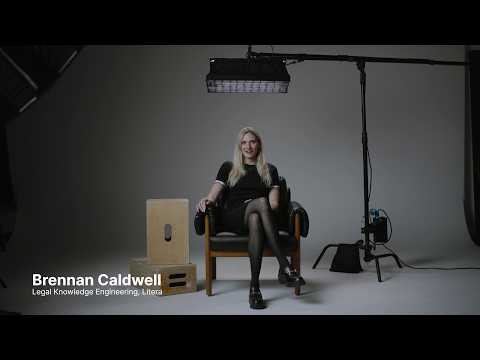
Customer testimonial for Litera, from the Lapse Productions portfolio.
That is why the cheapest feedback comes before the shoot. Read the script aloud and approve the interview questions, the shot list, and who appears on camera. If someone might say a product name that is changing, or a person might leave the company before launch, raise it then.
What adds a revision round?
- Notes in pieces. Three emails from three people on three days means the editor makes changes, then remakes them.
- Conflicting notes. Marketing wants it shorter, sales wants another feature in it. If the team does not settle it, the edit tries to do both.
- A new reviewer at the fine cut. They have not seen the approved structure, so their notes reopen it.
- New ideas that were not in the brief. A new audience, message, or use for the video is a change of scope, not a revision.
- Reversing an approved note. Asking for the cut section back at the fine cut uses a round to return to where you started.
If a draft has a mistake on our side, such as a misspelled name we were given correctly, fixing it is free and does not count against your rounds.
What does a late change cost?
The later a change comes, the more it costs in time, and sometimes in money. Here is how it works at Lapse Productions (CAD, HST not included).
| When the change comes | What it means for cost | What it means for time |
|---|---|---|
| Brief or script | Part of planning. No editing cost. | Least time. It is words on a page. |
| Notes on the rough cut | Included (round one) | 2 to 3 business days after your notes arrive |
| Notes on the fine cut | Included (round two) | 2 to 3 business days after your notes arrive |
| Changes beyond the two rounds, or outside the brief | Quoted separately and approved in writing before work starts | Minor changes 72 hours to 1 week. Major changes 2 to 4 weeks. |
| Anything that needs new footage | A new filming day ($750 half day, $1,500 full day) plus editing | Booking a new shoot date |
| A faster turnaround on any round | Rush order, $500 | Agreed when you book it |
Minor changes are small adjustments such as text or timing. Major changes alter the story or style, or mean rebuilding the edit. The schedule is in our guide to how long video production takes, and the rates are on our video production pricing page. If you are writing revision terms into an agreement, our guide to what a video production contract should include covers rounds, scope, and sign-off.
How long do you have to give feedback?
Lapse Productions delivers the rough cut within 7 business days of the shoot. After that, the schedule depends on how quickly notes come back: feedback within 24 to 48 hours of each draft keeps the final delivery date where it was planned, and a slower round pushes it back. Under Lapse Productions’ agreement, you have four weeks from the delivery of a draft to send feedback. If none arrives in that window, the project is treated as complete, and later changes need a new agreement. Our frequently asked questions page covers revisions, delivery, and ownership in one place.
If your approvals take longer, for example because other decision makers or legal need to see each cut, say so at kickoff, so the schedule includes that time instead of discovering it at the fine cut.
Video feedback template
Copy this into a shared document, have every reviewer add to it, then send the consolidated version (or move each line into Frame.io comments).
| Timecode | Note (what and why) | Must-fix or preference | From |
|---|---|---|---|
| 0:31 | Title should read Director of Operations | Must-fix | Priya |
| 1:05 to 1:20 | Repeats the point at 0:40. Cut one. | Preference | Sam |
Planning a video with a short approval chain, or a long one? Our corporate video production services page shows the formats we produce and how each project runs.
Want an edit that lands in two rounds?
Tell us what the video needs to do and who has to approve it. Dario and Kyrill will plan the review stages into the schedule and price the project against our itemized rate card.
Get a free competitive quoteFrequently asked questions
How many revision rounds are included in a video edit?
At Lapse Productions, every edit includes two review rounds: one on the rough cut and one on the fine cut. Changes beyond those two rounds, or anything outside the original brief, are quoted separately and approved in writing before work starts. Fixes for a mistake on our side are free and do not count against your rounds.
What is the difference between a rough cut and a fine cut?
A rough cut is the first full assembly of the video, used to check the story, structure, and who appears in it. Colour, sound, and graphics can still be unfinished. A fine cut is the polished version built from your rough cut notes, where you check pacing, music, on-screen text, names, and the call to action.
How do you give good video feedback?
Tie each note to a timecode, describe the problem and why it matters, and label it as a must-fix or a preference. Write one note per issue. Collect every reviewer’s notes, settle any conflicts inside your team, and send one consolidated set within 24 to 48 hours so the schedule holds.
What happens if I need more changes after the fine cut round?
Lapse Productions assesses the request and sends a separate cost estimate based on the work involved, and starts only after you approve it in writing. Minor changes such as text or timing usually take 72 hours to 1 week. Major changes that alter the story or style take 2 to 4 weeks.
How long do I have to give feedback on a draft?
Lapse Productions delivers the rough cut within 7 business days of the shoot, and notes sent within 24 to 48 hours of each draft keep the final delivery date on track. Under the Lapse Productions agreement, you have four weeks from the delivery of a draft to send feedback. If no feedback arrives in that window, the project is treated as complete and further changes need a new agreement.
Dario Nouri is a Producer and Co-Founder of Lapse Productions, a Toronto corporate video, photography, and drone production company founded in 2014. He plans and produces corporate video for clients across the Greater Toronto Area, and hosts Creatives Grab Coffee, a podcast on the business of video production.