
Lapse Productions reviews the strongest International Women’s Day campaigns every year, and 2026 marked a clear shift: the best work traded slogans for action. A city rewrote its national motto, an activewear brand turned a safety statistic into a film, and a software company skipped the inspiration reel entirely and handed out grants. Below are the Women’s Day video ads that defined 2026, followed by the past campaigns that still set the standard, and what all of them teach about making purpose-driven video that actually lands.
Women’s Day 2026 at a glance
- International Women’s Day is observed every year on March 8, and the 2026 campaign theme was #GiveToGain
- Boldest idea: the City of Paris darkened the Eiffel Tower to display Liberte. Egalite*. Fraternite.
- Best film craft: LSKD built a campaign on the statistic that 92 percent of women worry about safety while running
- Biggest shift: brands moved from inspirational messaging to concrete action, like CAKE.com’s 15,000 dollar grant for women-led businesses
- The strongest campaigns launched in the first week of March, which means production wrapped in February
What is International Women’s Day?
International Women’s Day (IWD) is celebrated every year on March 8 to recognize the achievements of women worldwide and push for gender equality. The 2026 campaign theme, according to InternationalWomensDay.com, was #GiveToGain, built on the idea that giving time, knowledge, and resources accelerates equality faster than words alone.
That theme explains a lot about what brands produced this year. Audiences have become quick to call out performative campaigns, so the work that stood out in 2026 paired its message with something real: a grant, a policy, a piece of infrastructure, or a permanent change to a landmark.
Which Women’s Day video ads stood out in 2026?
1. City of Paris: Terms and Conditions of Being a Girl

The idea of the year. Agency BETC Paris argued that for women, France’s national motto comes with fine print, so on March 8 the lights of the Eiffel Tower went dark to display an updated version: Liberte. Egalite*. Fraternite. The asterisk pointed to the long list of terms and conditions women are forced to accept, from unequal pay to feeling unsafe walking at night. Mayor Anne Hidalgo announced the stunt in a video to the nation and committed to adding the names of 72 female scientists to the tower, alongside the 72 men already engraved on it. The film documents the whole takeover, and the asterisk became a symbol people adopted in their own social media names. This is what happens when a video is the record of a real act rather than a substitute for one.
2. LSKD: She Runs, But She Is Never Just Running

Australian activewear brand LSKD built its 2026 film on one statistic: 92 percent of women worry about their safety when they head out for a run. The spot turns a simple jog into the mental checklist many women actually run through, tracking surroundings, lighting, and phone battery, and lands on a sharp line: safety should not be a strategy. For a sportswear brand, this is the category conversation that matters, handled with restraint instead of triumph. It is also a masterclass in building a film around a single number, which is a structure any brand with good data can borrow.
3. CAKE.com: Your Space to Grow

The most corporate-relevant campaign of the season came from CAKE.com, the software company behind Clockify. Its position: women-led businesses do not lack ambition, they lack infrastructure. So instead of an inspiration reel, the company launched a 15,000 dollar enterprise software grant, giving up to 100 seats of its productivity suite to women-owned businesses for a year, and paired it with unscripted video interviews with female founders sharing advice that rarely makes it into polished keynotes. The campaign’s own framing says it best: no inspiration theater, no symbolic gestures, just tools. For B2B companies wondering how to show up on March 8, this is the template.
One more 2026 campaign worth studying: Manchester City’s Send it Forward, built directly on the #GiveToGain theme. Players and staff, from the women’s team to sports science and data roles, wrote advice for the next generation, distributed through augmented reality postcards that fans could collect in stores or send free online to a girl they wanted to inspire. It shows how a giving mechanic can turn a one-day observance into a month of participation.
Which past Women’s Day campaigns still set the standard?
A great Women’s Day campaign does not expire on March 9. These earlier films remain the reference points we share with clients planning purpose-driven video.
4. UEFA: The World Does Not Stop Watching

UEFA connected Women’s Day to the momentum of women’s football, cutting match footage into a montage that treats the players as mainstage talent rather than a niche story. The lesson holds: align your message with a cultural movement that is already accelerating, and your campaign inherits its energy.
5. Barbie: Possible With Her
Barbie shifted the spotlight from dolls to the real women who inspired them, profiling role models in robotics, sports, and environmental science. It works because the brand connects its product to a purpose bigger than itself: girls imagine more when they can see someone who has already done it.
6. Vans: Always Pushing

Vans spotlighted women in skateboarding, a subculture where inclusion has lagged, blending cinematic footage with unpolished realness. The campaign feels embedded in the community rather than imposed on it, which is exactly why it still gets referenced.
7. Mercedes-Benz Canada: Be One of Many

A Canadian entry with a sharp reframe: instead of celebrating exceptional women, it argues for a world where women in engineering, design, and tech are not exceptions at all. Normalizing equity turns out to be a bolder message than celebrating excellence.
8. Kotex: #ProgressFeelsLike

Kotex launched this campaign alongside a global study showing nearly 60 percent of women feel progress toward equality is lacking. Leading with an uncomfortable truth, then defining progress through lived experience rather than milestones, gives the film a credibility most holiday marketing never earns.
9. Women in Construction Institute: People at Work
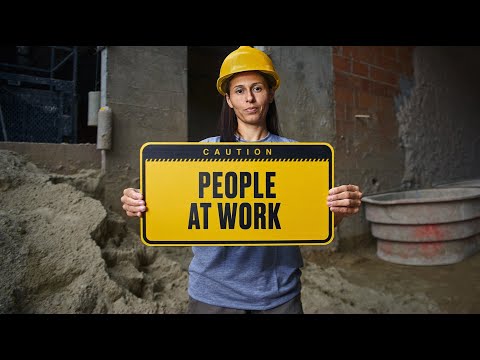
A minimalist film that replaces labels like female engineer and female boss with one universal term: people at work. No dramatic music, no big edit, just a sharp observation about the gender qualifiers embedded in everyday language. Restraint is the whole idea, and it works.
10. GoPro: International Women’s Day

GoPro celebrated the day with content shot entirely by women, from climbers to surfers to community leaders, letting their perspectives speak literally through their own lenses. When your product is the platform, the strongest move is to amplify what your audience is already creating.
What makes a Women’s Day campaign work?
Three patterns run through every campaign on this list. First, action beats sentiment: the 2026 standouts attached their films to a grant, a landmark, or a giving mechanic, because audiences now discount words that arrive without proof. Second, specificity beats scale: LSKD’s single statistic and the People at Work language observation hit harder than any montage of generic empowerment imagery. Third, the format should match the brand’s credibility: a sportswear company can talk about runner safety, a software company can fund tools, and a corporate team is often strongest simply filming the women who already work there. That last one is the most accessible route for most businesses: a well-produced recruitment video or employee spotlight series carries the message all year, not just in March. If you are mapping out the timing, our holiday campaign planning guide covers lead times for every major date, and our Mother’s Day video ads breakdown covers the next occasion on the spring calendar.
Planning a Women’s Day campaign or an employee spotlight series? Lapse Productions handles concept, production, and delivery under one roof, with interview-driven storytelling as one of our core strengths.
Get Your Free QuoteFrequently Asked Questions
How much does a Women’s Day video cost to produce?
Our pricing packages start at: Simple at $3,410, Standard at $6,000, and Premium at $8,000. Interview-driven formats like employee spotlights are typically faster and more cost-effective than scripted brand films, so the final cost depends on concept, shoot days, and deliverables.
When should I start planning a Women’s Day video campaign?
Start planning in December or January and have production wrapped by mid February. International Women’s Day falls on March 8 every year, and the strongest 2026 campaigns launched in the first week of March. A four to six week runway for concept, filming, and editing is the minimum for a polished result.
What type of video works best for International Women’s Day?
Interview-driven and documentary formats consistently perform best. Spotlighting the real women in your company or community reads as authentic, while generic empowerment montages increasingly read as performative. If your brand can pair the video with a concrete action, like a grant, a donation, or a policy commitment, the message lands even harder.
How do brands avoid pinkwashing on Women’s Day?
Back the message with something real. The strongest 2026 campaigns attached their films to concrete resources, like CAKE.com’s software grant for women-led businesses and the City of Paris adding 72 female scientists’ names to the Eiffel Tower. If your company’s practices contradict the message, fix those first, because audiences will check.
Dario Nouri is a Producer and Co-Founder of Lapse Productions, a Toronto video production company creating results-based content since 2014. He also hosts Creatives Grab Coffee, a podcast on the business of video production.